
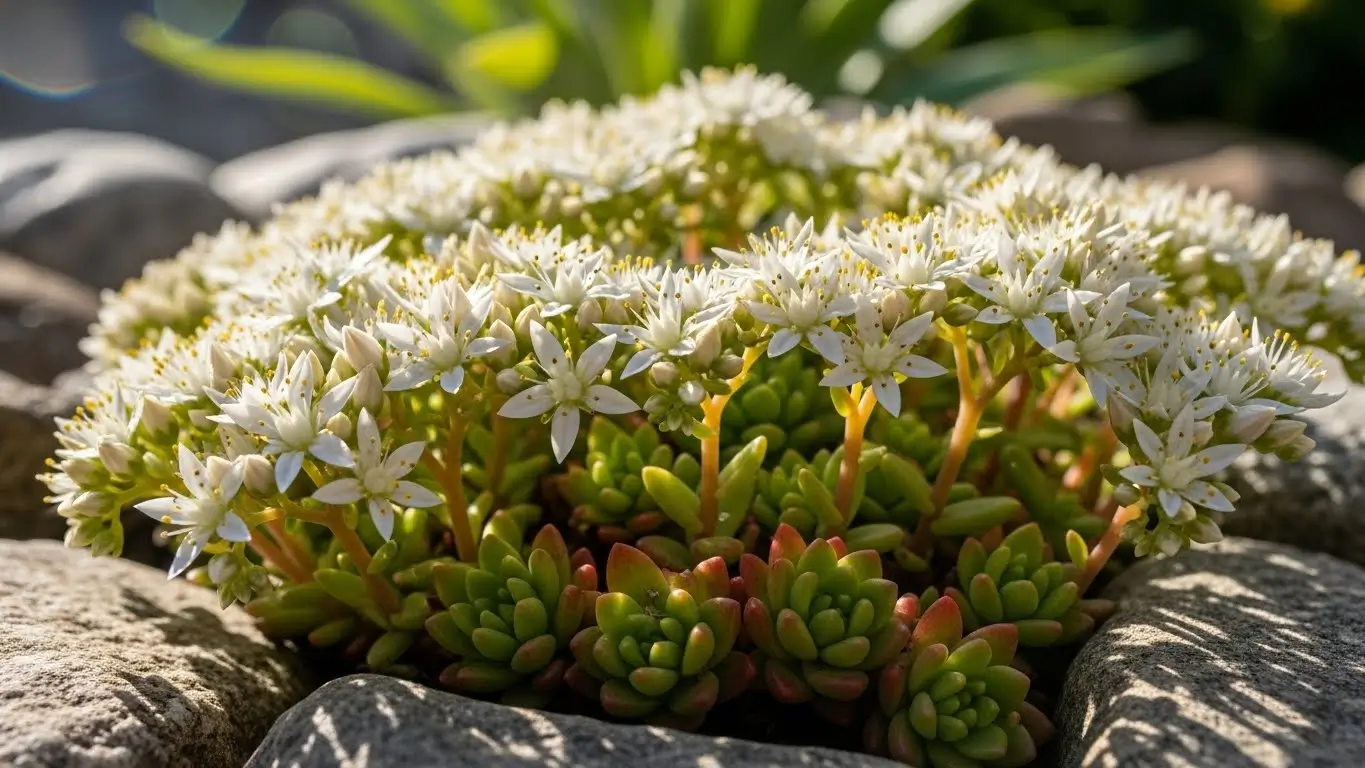
Imagine a plant that thrives on neglect, blankets the ground in a lush tapestry of green and white, and asks for little more than a sunny spot and well-drained soil. This isn’t a gardening myth; it’s the reality of Sedum album, commonly known as White Stonecrop. A superstar in the world of succulents, this hardy perennial is a problem-solver for gardeners dealing with tough, dry, and poor soils where other plants simply give up.
Whether you’re a seasoned horticulturist looking to fill a tricky spot or a beginner seeking a guaranteed success, this deep dive into Sedum album will show you why it deserves a prime location in your garden.
What Exactly is Sedum album?
Sedum album is a low-growing, tufted perennial that naturally spreads to form attractive, mat-like clusters. It’s a member of the Crassulaceae family, which means it’s related to the jade plant and other drought-loving favorites. Its common name, White Stonecrop, comes from its prolific display of tiny, star-shaped white flowers that bloom in the summer, creating a stunning contrast against its foliage.
The “stonecrop” name is a nod to its typical habitat—it’s often found growing on and around stones, walls, and rocky outcrops in its native range across Europe, North Africa, and Western Asia. It’s a plant that has mastered the art of survival.

Key Identifying Features
To properly recognize Sedum album, look for these characteristics:
- Growth Habit: It’s a low-growing, tufted perennial that forms dense, attractive, mat-like clusters. For most of the year, its stems remain short, semi-prostrate, and tightly covered with leaves.
- Foliage: The leaves are alternate, fleshy, and nearly cylindrical, ending in a blunt, rounded tip. They are typically about 1/4 to 1/2 inch long and start out bright green. During dry periods or when exposed to full sun, they often develop attractive red or bronze tints, adding to their visual interest.
- Flowers: Its small, star-shaped flowers grow in dense cymes. Each bloom is a intricate masterpiece, featuring five pure white petals, ten stamens, and five pistils.
- Root System: It has a shallow, fibrous root system, which allows it to colonize thin soils and crevices with ease.
The Flowering Transformation
The arrival of summer brings a remarkable change to the otherwise ground-hugging plant. The flowering season, typically in July and August, triggers a fascinating transformation.
- Stem Elongation: The stems that were once short and semi-prostrate begin to elongate and stand upright, sometimes branching out. These flowering stalks often develop soft pinkish-brown hues, providing a beautiful preview of the blooms to come.
- Floral Structure: The flowers are arranged in dense, branched clusters known as cymes. Upon closer inspection, you can see the five thick sepals fused at the base, supporting the five pure white, pointed petals.
- Pollinator Hub: This elevated display of countless white stars becomes a hub of activity, attracting bees, butterflies, and other pollinators.
- Post-Bloom: After flowering, the plant produces fruit composed of five united, many-seeded follicles, ensuring the next generation.
Why You Should Grow White Stonecrop in Your Garden
This unassuming plant packs a powerful punch when it comes to garden benefits. It’s far more than just a pretty face; it’s a workhorse.
1. Unbeatable Drought Tolerance
As a succulent, Sedum album stores water in its leaves. This makes it exceptionally drought-tolerant once established. It’s the perfect choice for xeriscaping, rock gardens, and for gardeners in regions with water restrictions.
2. Extremely Low Maintenance
If you’re looking for a “plant it and forget it” species, this is a top contender. It requires minimal watering, no fertilizing, and is largely pest and disease-free. Its main maintenance need is occasionally keeping its spread in check.
3. Superb Groundcover Abilities
Its mat-forming nature makes it an excellent erosion control plant for slopes and banks. It quickly covers the soil, suppressing weeds and creating a uniform, textured carpet that is visually pleasing year-round.
4. A Pollinator Paradise
When in bloom, the sea of white flowers is a magnet for beneficial insects. You’ll see:
- Bees
- Butterflies
- Hoverflies
This makes it a valuable plant for supporting local biodiversity and promoting a healthy garden ecosystem.
5. Tough as Nails
Sedum album is remarkably cold hardy, thriving in USDA zones 3 through 9. It can survive harsh winters and scorching summers with equal aplomb.
How to Grow and Care for Sedum Album
The golden rule for growing Sedum album successfully is to replicate its natural, rugged habitat. Think sunshine and sharp drainage.

The Perfect Planting Conditions
- Sunlight: Full sun is ideal. It encourages tighter growth, more abundant flowering, and those attractive red leaf tints. It can tolerate very light shade, but may become leggy and flower less.
- Soil: The absolute most critical factor is well-draining soil. It thrives in poor, sandy, or gravelly soils. It will struggle and likely rot in heavy, water-retentive clay. If your soil is poor-draining, amend it with gravel, perlite, or sharp sand, or consider planting in a raised bed or container.
- Watering: Water regularly only after planting to help it establish. Once settled, it’s incredibly self-sufficient. Rely on rainfall. During extended, severe droughts, a deep soak every few weeks is sufficient. When in doubt, it’s better to underwater than overwater.
A Simple Guide to Propagation
One of the joys of Sedum album is how effortlessly it propagates. You can create dozens of new plants for free.
- Division: In spring or early fall, simply dig up a clump and gently pull or cut it into smaller sections, each with some roots and stems. Replant immediately.
- Stem Cuttings: Snip off a healthy stem, let the cut end callous over for a day or two, and then place it on top of moist, well-draining soil. It will quickly root at the leaf nodes.
- Leaf Cuttings: Gently twist a leaf from the stem. Let it callous, then place it on soil. Tiny new roots and plantlets will emerge from the base of the leaf.
Ongoing Maintenance and Potential Problems
Maintenance is minimal, but here’s what to keep an eye on:
- Fertilizing: Do not fertilize. Rich soil and fertilizer can cause weak, floppy growth and reduce its hardiness.
- Pruning: No regular pruning is needed. You can trim it back if it overgrows its bounds or tidy it up in early spring to remove any winter-damaged foliage. After flowering, you can deadhead the spent blooms for a tidier appearance, but it’s not necessary for the plant’s health.
- Pests and Diseases: It’s largely trouble-free. The only significant threat is root rot from overwatering or poor drainage. Slugs and snails might occasionally nibble on new growth, but they are rarely a serious issue.
Design Ideas: Using White Stonecrop in Your Landscape
Sedum album is incredibly versatile. Here are some inspiring ways to incorporate it into your garden design.
The Classic Rock Garden Star
This is its natural home. Plant it between rocks and boulders, allowing it to spill over edges and soften hard lines. It pairs beautifully with other drought-tolerant plants like thyme, sempervivums (hens and chicks), and dwarf ornamental grasses.
A Living Roof or Green Roof
Sedum album is a primary species used in sedum mats for green roofs. Its shallow roots, drought tolerance, and ability to thrive in thin soil make it perfectly suited for this eco-friendly application.
Between Stepping Stones and Pavers
Its ability to handle light foot traffic makes it an excellent choice for planting in the gaps between stepping stones. It releases a pleasant, earthy scent when brushed against and creates a beautiful, living pathway.
Container and Pot Accent
Use it as a “spiller” element in container combinations. Its trailing habit looks fantastic spilling over the edges of pots, complementing taller, structural plants like agaves or decorative grasses.
Erosion Control on Slopes
Plant it on a sunny bank or slope where mowing is difficult. Its dense mat of roots and foliage will hold the soil in place, preventing erosion while providing year-round visual interest.
Sedum album vs. Other Creeping Sedums
How does Sedum album stack up against its popular cousins?
- vs. Sedum spurium (Dragon’s Blood Stonecrop): S. spurium has flatter, broader leaves and typically has pink or red flowers. It’s similarly tough but S. album is often considered even more drought-tolerant.
- vs. Sedum kamtschaticum (Russian Stonecrop): This species has scalloped, glossy leaves and yellow flowers. It’s also very tough, but S. album generally forms a denser, finer-textured mat.
- Why choose S. album? Choose it for its classic succulent foliage, its reliable cloud of white flowers, and its proven performance in the most challenging, dry conditions.
Frequently Asked Questions (FAQ)
Is Sedum album invasive?
While Sedum album is a vigorous, fast-spreading groundcover, it is not typically classified as an invasive plant. Its shallow root system and non-aggressive growth make it easy to control. You can easily manage its spread by simply pulling up or trimming back unwanted sections at the edges of its planting area.
Can Sedum album grow indoors?
It can be grown indoors, but it’s not ideal. Sedum album thrives in full sun and excellent air circulation, which are difficult to replicate inside. Without several hours of direct sunlight daily, it will likely become leggy and weak. It performs best outdoors in a rock garden, container, or between paving stones.
How fast does White Stonecrop spread?
Sedum album is a moderately fast-spreader. You can expect it to establish itself and form a dense mat with noticeable growth within a single growing season. Its rate of spread will depend on sunlight, soil quality, and available moisture.
Does it attract pollinators?
Absolutely! When Sedum album blooms in summer, its clusters of tiny, star-shaped white flowers are a magnet for pollinators. You will frequently see bees, butterflies, and hoverflies visiting the flowers, making it a valuable plant for supporting local biodiversity.
Is Sedum album safe for pets?
According to the ASPCA, Sedum species are generally considered non-toxic to cats and dogs. However, as with any non-food plant, ingestion of a large amount may cause mild gastrointestinal upset. It’s always best to discourage pets from chewing on garden plants.
The Takeaway: Is Sedum Album Right for You?
Sedum album is the perfect plant for any gardener who values resilience, beauty, and ease of care. It’s a solution for problematic dry spots, a boon for pollinators, and a textural delight in the landscape. If you have a sunny spot with decent drainage and you’re looking for a plant that will not just survive but thrive with minimal input, White Stonecrop is an exceptional choice. It proves that the toughest plants can often be the most beautiful.


