
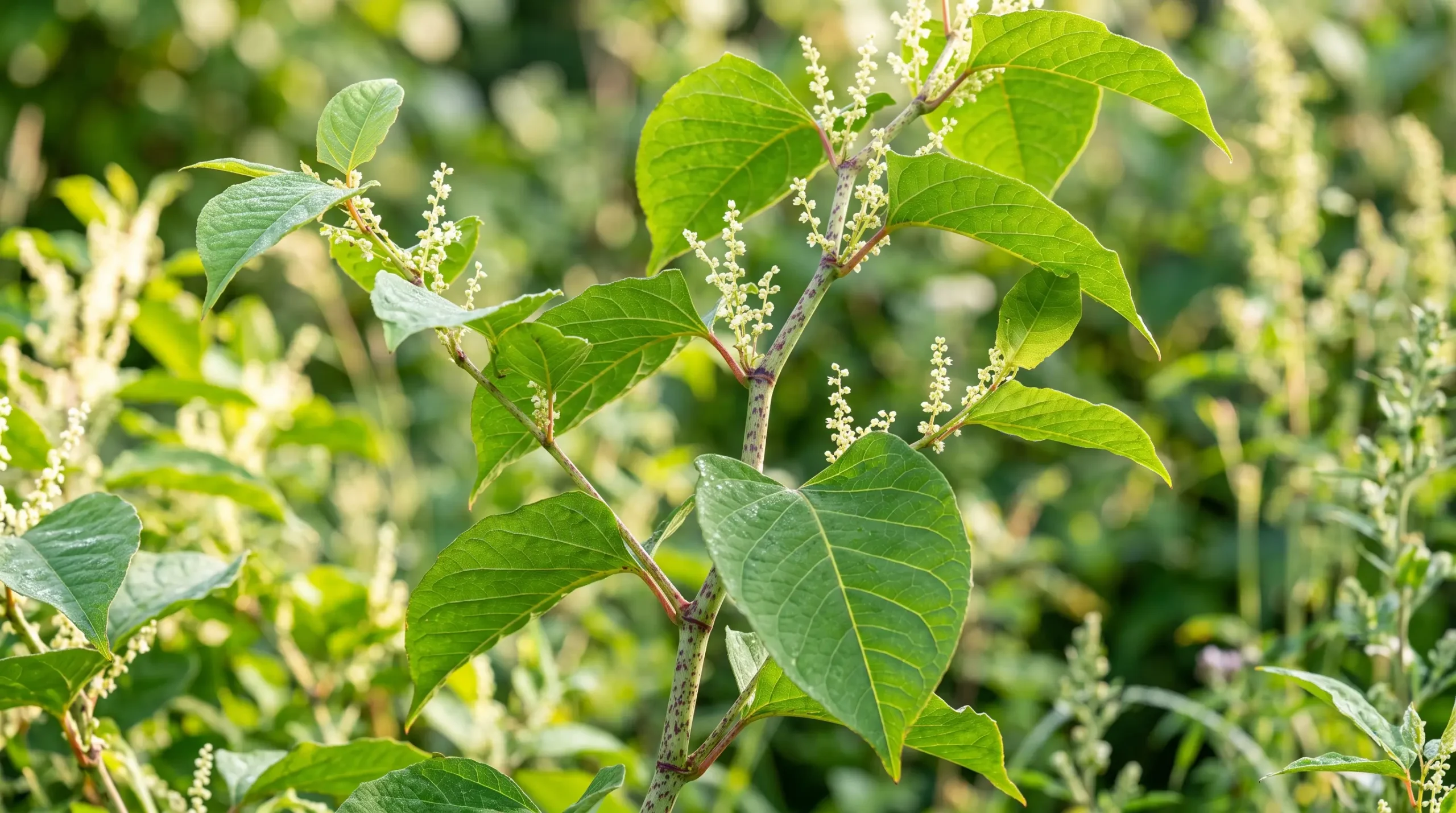
As a certified horticulturist and invasive species specialist with over 15 years in the field, I have seen many “garden nightmares,” but none quite as formidable as Japanese knotweed. Often dubbed “the plant that eats houses,” Japanese knotweed (Reynoutria japonica) is a herbaceous perennial that has earned its reputation as one of the world’s most aggressive invasive species.
Originally brought to North America and Europe in the 19th century as an ornamental plant and for erosion control, it quickly escaped cultivation. Today, it poses a significant threat to local biodiversity, infrastructure, and even property values.
If you’ve discovered this plant on your property, don’t panic—but do take it seriously. Early detection and a calculated, long-term strategy are your best defenses. In this guide, I will draw upon my years of experience in landscape restoration to teach you exactly how to get rid of Japanese knotweed safely, effectively, and permanently.


Key Takeaways
- Identification is Key: Look for bamboo-like stems, heart-shaped leaves, and aggressive red shoots in spring.
- Do Not Mow: Mowing or weed-whacking can spread tiny fragments that regenerate into new plants.
- Persistence is Required: Total eradication typically takes 3 to 5 years of consistent effort.
- Root Systems are Massive: Rhizomes can grow 10 feet deep and 23 feet horizontally.
- Legal Disposal: Never put knotweed in garden waste or compost; it requires specialized disposal to prevent spread.
Quick Answer
To get rid of Japanese knotweed, the most effective approach combines long-term monitoring with either professional herbicide treatment or complete removal of the underground rhizomes. Because even small root fragments can regrow, proper disposal and ongoing inspections are essential. Most infestations require several growing seasons to fully control.
What Is Japanese Knotweed?
Japanese knotweed is a member of the buckwheat family (Polygonaceae). Scientifically known as Reynoutria japonica (formerly Fallopia japonica), it is native to East Asia (Japan, China, and Korea), where volcanic ash and natural pests keep its growth in check. Without those natural checks in Western ecosystems, it becomes an “ecological vacuum,” sucking up resources and crowding out everything else.
Growth Habit and Characteristics
- Bamboo-like Stems: The stems are hollow, speckled with purple/red, and can grow up to 10 feet tall.
- Heart-Shaped Leaves: Large, shield-shaped or heart-shaped leaves with a flat base.
- The Rhizome System: This is the plant’s “brain.” The underground network of thick, woody roots (rhizomes) stores immense energy, allowing the plant to survive harsh winters and even fire.
Why Japanese Knotweed Is a Serious Problem
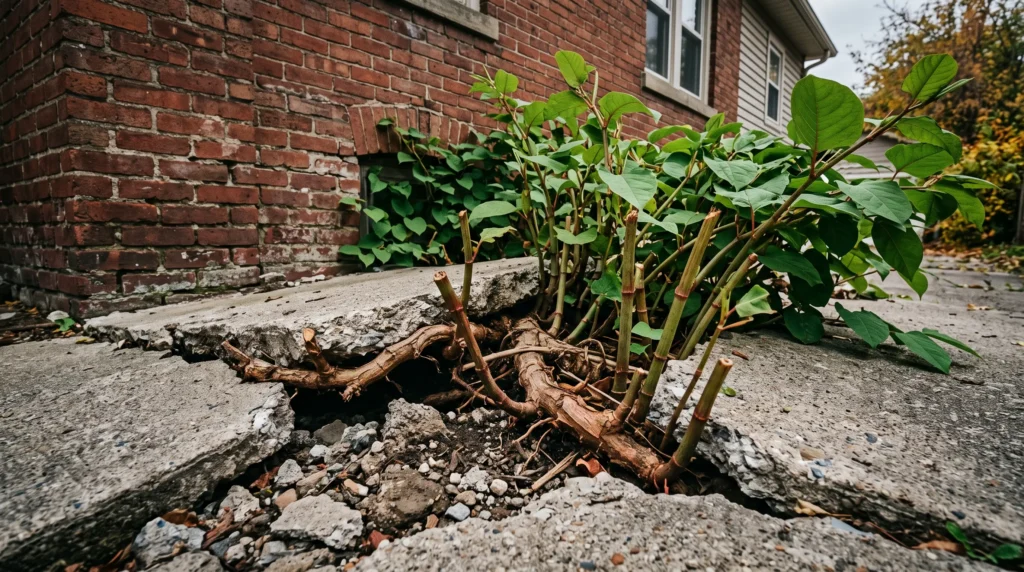
Understanding the “why” behind the panic helps you appreciate the need for thoroughness in knotweed control.
- Infrastructure Damage: While it doesn’t “eat” solid concrete, knotweed is an opportunist. It finds existing cracks in foundations, retaining walls, pipes, and pavement, expanding them as the thick rhizomes grow.
- Rapid Spread: In the peak of summer, knotweed can grow up to 8 inches per day.
- Ecological Impact: It forms “monocultures”—dense thickets where nothing else can grow. This destroys habitats for local pollinators and wildlife.
- Riverbank Erosion: While it was once used to stabilize soil, knotweed actually increases erosion. It dies back completely in winter, leaving riverbanks bare and vulnerable to being washed away during winter floods.
- Property Value & Legality: In some regions, like the UK, presence of knotweed can make it impossible to secure a mortgage. In many US states, it is a “Prohibited Noxious Weed,” meaning you are legally required to control it.
How to Identify Japanese Knotweed
Proper Japanese knotweed identification is the first step in any invasive Japanese knotweed management plan. Using the wrong method on the wrong plant can waste time or, worse, make the problem worse.
Seasonal Identification Guide
| Season | What to Look For |
|---|---|
| Spring | Red/purple fleshy shoots emerging from the ground, resembling asparagus. Leaves start folded and dark red. |
| Summer | Rapidly growing green stems with purple speckles. Large, vibrant green heart-shaped leaves arranged in a zig-zag pattern. |
| Late Summer | Small, creamy-white flower clusters (panicles) that droop from the leaf axils. |
| Autumn | Leaves turn yellow and eventually orange-brown. Stems begin to dry out and turn brittle. |
| Winter | The plant leaves behind dead, hollow, brown “canes” that remain standing. The rhizomes remain active underground. |
Expert Tip: Look at the stems. If they are hollow, have purple spots, and the leaves grow in a distinct “zig-zag” pattern along the branch, you are likely looking at knotweed.
Plants Commonly Confused with Japanese Knotweed
Before you begin Japanese knotweed treatment, ensure you aren’t actually dealing with a harmless native plant.
| Plant | Key Difference |
|---|---|
| Bamboo | Bamboo has very narrow leaves and incredibly hard, woody stems. Knotweed stems are fleshy and easy to snap. |
| Giant Knotweed | A “cousin” of Japanese knotweed. It is much taller (up to 15ft) and has much larger, heart-shaped leaves with a wavy base. |
| Dogwood | Dogwood leaves grow in pairs (opposite), whereas knotweed leaves grow one at a time (alternate). |
| Himalayan Balsam | This has seed pods that “explode” when touched and reddish-pink flowers. It lacks the woody rhizome of knotweed. |
How Japanese Knotweed Spreads
In North America and Europe, Japanese knotweed rarely produces viable seeds. Instead, it spreads almost exclusively through vegetative reproduction.
- Rhizomes: A fragment of root as small as 0.7 grams (the size of a fingernail) can grow into a completely new plant.
- Soil Movement: Construction activity or moving “clean fill” that is actually contaminated is the #1 cause of new infestations.
- Floodwater: Pieces of root break off during floods and wash downstream, infesting new riverbanks.
- Garden Waste: Improperly dumping “green waste” in the woods or at the curb can start an invasion.
Can You Remove Japanese Knotweed Yourself?
This is the most common question I receive as a specialist.
Yes, you can DIY if:
- The patch is small (under 10 square feet).
- The plant is in an accessible area with no nearby water sources.
- You are prepared to monitor the site for at least 3–5 years.
You should hire a professional if:
- The infestation is large or near a foundation.
- The knotweed is on a riverbank (this requires specialized “aquatic-safe” permits and expertise).
- You are selling your property soon and need a certified management plan for legal/mortgage purposes.
Step-by-Step Removal Methods
There is no “silver bullet” for knotweed control. The best approach is often an Integrated Pest Management (IPM) strategy.
1. Manual Removal: Digging Out Japanese Knotweed
This is extremely labor-intensive and only recommended for very small, new clusters (less than 3 feet in diameter). Because the plant is so resilient, manual digging out of Japanese knotweed requires surgical precision.
- Identify the boundary: The knotweed roots extend far beyond the visible stems. Start your excavation at least 3 feet away from the outermost canes to ensure you catch the leading edge of the root system.
- Dig deep: You must remove every inch of the orange, woody knotweed rhizomes, which can reach depths of 10 feet. Because these roots are incredibly tough and dense, standard garden shovels often snap under the pressure. I highly recommend using a reinforced digging spade; its sharp, narrow blade is designed specifically to slice through woody invasive roots that would stop a regular shovel.
- Sift the soil: Once you’ve dug the area, sift the soil through a fine mesh. Even a fragment of a rhizome the size of your fingernail can regenerate into a full-grown plant.
- Repeat: This is not a “one and done” job. You will need to check the spot every two weeks throughout the growing season for “volunteer” shoots and remove them immediately.
Expert Tip: If the knotweed is near a wall or a water pipe, stop digging. Agitating the soil near infrastructure can actually encourage the roots to grow deeper into the cracks. In those cases, switch to a treatment method instead.
2. The Smothering Method
Smothering involves depriving the plant of light.
- Cut the knotweed to ground level.
- Layer heavy-duty, UV-rated landscape fabric or 7-mil black plastic over the area.
- Extend the cover 10 feet beyond the last visible stem.
- Weight it down with heavy rocks or mulch.
- Caution: Knotweed can grow through thin plastic. This method often takes 5+ years to be effective.
3. Repeated Cutting (Starvation)
This method aims to exhaust the energy stored in the rhizomes.
- Cut the stems to the ground every time they reach 6 inches in height.
- Never let the plant leaf out, as leaves provide “recharge” energy to the roots.
- Warning: This can take 5–10 years to kill the plant and often just triggers the rhizomes to spread horizontally to find light elsewhere.
Herbicide Treatment
For many property owners, using a systemic herbicide for Japanese knotweed is the only realistic way to achieve total eradication. Unlike surface weeds, knotweed has a massive underground energy reserve. To truly learn how to kill Japanese knotweed, you must use a product that travels through the leaves and down into the deep knotweed rhizomes.
- Timing is Critical: The most effective time for Japanese knotweed treatment is late summer or early fall (August–September). During this window, the plant stops growing upward and begins “pulling” nutrients down into the roots for winter dormancy. By applying treatment now, the plant effectively “sucks” the herbicide down to the roots for a more lethal hit.
- Choosing the Right Product: Retail-grade weed killers from the local hardware store are often too weak. For a successful kill, professionals use a professional-grade 53.8% Glyphosate concentrate. This high-strength formula is designed to penetrate the woody exterior of the plant and reach the root system.
- Foliar Spray vs. Stem Injection:
- Foliar Spray: This is faster for large, dense thickets. You spray the leaves directly, but you must be careful of “drift” onto nearby flowers or grass.
- Stem Injection: This is the “gold standard” for smaller patches or plants near prized garden beds. By using a specialized Stem Injection Tool, you inject the herbicide directly into the hollow cane between the first and second nodes. This delivers the chemical directly to the plant’s vascular system with zero risk to the surrounding landscape.
- Consistency is Key: A single application will not work. Japanese knotweed is a survivor. You should expect to treat the area once or twice a year for at least 3 consecutive years. If you stop after year one, the stunted rhizomes will eventually recover and send up new shoots.
Safety Note: Always follow local regulations and label instructions when using any herbicide for Japanese knotweed. Wear protective gear, including gloves and eye protection, and ensure the weather is dry and calm before application.
Expert Tip: The “Hack and Squirt” Method
If you don’t have an injection tool, some gardeners use the “hack and squirt” method. They cut the cane about 6 inches from the ground and immediately pour a small amount of concentrated herbicide into the hollow stem. This ensures the chemical is absorbed quickly before the plant can “seal” the wound.
Safe Disposal: The Most Critical Step
Improper disposal of invasive garden weeds like knotweed is often a violation of environmental law.
- Never Compost: Home compost piles do not get hot enough to kill knotweed rhizomes.
- Never Put in Curbside Green Waste: You will spread the infestation to your city’s mulch facility.
- The “Burn or Bag” Rule:
- Bagging: Double-bag the plant material in heavy-duty plastic bags and let them sit in the sun to “solarize” (rot) for several weeks before taking them to a landfill designated for invasive species.
- Burning: If local ordinances allow, drying the canes and burning them on-site is effective. The ash is safe.
Restoring the Area
Once the knotweed is under control, landscape restoration is vital. If you leave the soil bare, knotweed (or another invasive) will return.
- Test the Soil: Knotweed can alter soil pH.
- Plant Aggressive Natives: Use native species that can compete. Examples include Elderberry, Red-osier Dogwood, or Willow stakes.
- Mulch Heavily: Use 3–4 inches of wood chips to suppress any dormant fragments.
How Long Does Removal Take?
- Year 1: 90% reduction in top-growth (if using herbicide) or extreme labor (if digging).
- Year 2: Small, stunted “bonsai-like” shoots will emerge. Do not ignore them.
- Year 3-4: Continued monitoring and spot-treating.
- Year 5: Potential “dormancy.” The plant may seem gone, but the roots can stay dormant for years. Monitor the site.
Common Mistakes to Avoid
Expert Alert: Avoid these common pitfalls to save yourself years of work.
- Mowing: This is the worst thing you can do. It creates thousands of tiny propagules.
- Using the wrong herbicide: Some retail “weed killers” only burn the leaves but don’t touch the rhizomes.
- Giving up too soon: Many homeowners stop after Year 1 when the plant “looks dead.”
- Pulling without digging: If you pull the stem, the root stays. The plant reacts by sending up 10 more shoots.
Can Japanese Knotweed Be Prevented?
Preventing Japanese knotweed is much cheaper than removing it.
- Inspect Soil Deliveries: Only buy soil and mulch from reputable suppliers who certify their products as “weed-free.”
- Clean Your Gear: If you’ve been hiking or working in a known knotweed area, scrub your boots and tires.
- Property Inspections: Walk your property lines every spring to catch new shoots early.
Seasonal Knotweed Control Calendar
| Season | Activity | Goal |
|---|---|---|
| Early Spring | Identification & Mapping | Identify new shoots and mark the boundary of the infestation. |
| Late Spring | Cutting/Mechanical Control | If not using herbicide, begin cutting cycles now. |
| Summer | Monitoring | Ensure the plant hasn’t spread to neighbors; check for “breakouts” through fabric. |
| Late Summer/Fall | The “Golden Window” | Best time for herbicide application (after flowering). |
| Winter | Cane Removal | Cut and burn dead, dry canes to clear the way for next year’s work. |
Pros and Cons of Different Removal Methods
| Method | Pros | Cons |
|---|---|---|
| Manual Digging | Chemical-free; Instant gratification. | Extremely hard work; High failure rate. |
| Smothering | Non-toxic; Good for small patches. | Takes 5+ years; Ugly aesthetics. |
| Repeated Cutting | Low cost; No chemicals. | Rarely kills the root; Can take a decade. |
| Herbicide | Highest success rate; Less labor. | Chemical use; Requires strict safety. |
| Professional | Guaranteed results; Legal compliance. | Most expensive option. |
Frequently Asked Questions (FAQs)
What kills Japanese knotweed permanently?
A multi-year strategy involving systemic herbicides (specifically those containing glyphosate or imazapyr) applied in late summer is the most proven method for permanent eradication.
Can Japanese knotweed grow through concrete?
Not exactly. It cannot “drill” through solid, high-quality concrete, but it will find the smallest expansion joint or crack and expand it, eventually breaking through driveways or foundations.
Is Japanese knotweed poisonous?
No, it is not poisonous to touch. In fact, the young spring shoots are edible and taste like sour rhubarb. However, never eat knotweed that may have been treated with chemicals.
Can I compost Japanese knotweed?
Absolutely not. Knotweed can survive home composting and will likely infest your entire garden when you spread the finished compost.
Will vinegar kill Japanese knotweed?
Vinegar (acetic acid) may kill the green leaves, but it will not kill the massive underground rhizome system. The plant will grow back almost immediately.
Does insurance cover Japanese knotweed removal?
Standard homeowners’ insurance rarely covers the removal of invasive plants or the damage they cause.

Final Thoughts
Dealing with invasive Japanese knotweed is a marathon, not a sprint. It is a biological adversary that requires patience, strategy, and persistence. However, by using the identification and removal techniques outlined in this guide, you can reclaim your landscape and protect your property value.
Remember, the most important step is starting now. Every year you wait, the rhizome system grows stronger. Whether you choose to tackle the project yourself or hire a professional, stay committed to the 3-to-5-year monitoring window. With persistence, even the most stubborn knotweed can be defeated.


