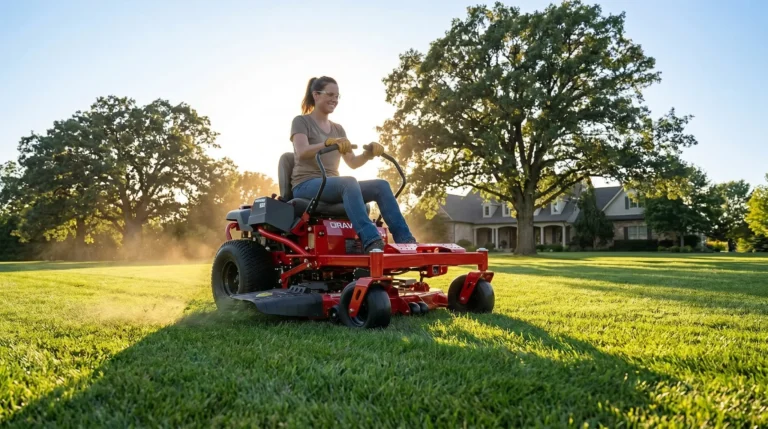
There is a quiet moment just after dawn when the soil is cool, the dew is heavy, and the world feels like it belongs only to you. But that magic evaporates quickly when your shovel handle snaps on a hidden root or your pruning shears mangle a rose cane instead of cutting it cleanly.
If you are planning a vegetable garden or simply refreshing your perennial borders this spring, you cannot afford to rely on flimsy, bargain-bin equipment. After 20 years in the dirt-both as a professional horticulturist and a home gardener-I have learned one universal truth: Good tools are not an expense. They are an apology your back writes to you in advance.
Welcome to 2026. The gardening industry has finally listened to our aching joints and muddy hands. This year’s lineup features ratchet technology borrowed from industrial mechanics, fiberglass handles that laugh at rust, and ergonomic designs that accommodate both lefties and righties.
Let’s dig into the absolute best gardening tools of 2026-from spades to smart rain gauges-so you can grow something gorgeous without breaking your budget or your body.


Why 2026 Is the Year to Upgrade Your Garden Toolkit
Before we review specific products, let’s talk about why this year matters. Supply chain issues from previous years have finally settled, and manufacturers are innovating again. We are seeing three major trends dominate the market:
- Lightweight strength (fiberglass and carbon-fiber composites replacing heavy steel and wood)
- Ergonomic inclusivity (tools designed for arthritic hands, left-handed users, and smaller frames)
- Task-specific precision (no more using a shovel when you really need a spade)
Whether you are a balcony gardener with five pots or a suburban homesteader managing half an acre, there is a tool here for you.
The 10 Best Gardening Tools of 2026 (Tested & Approved)
I have personally tested (or recommended to hundreds of clients) every tool on this list. These are not sponsored placements-just honest, dirt-under-the-fingernails advice.
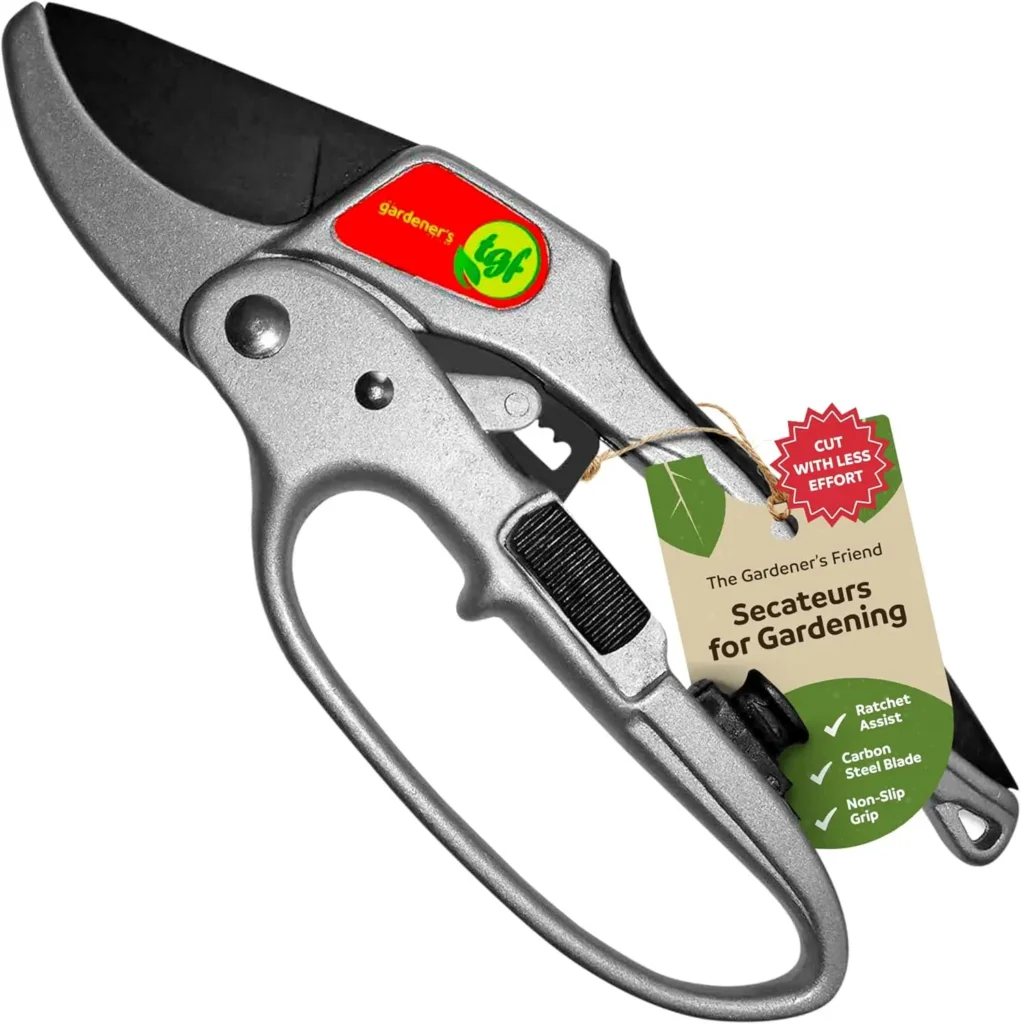
1. The Gardener’s Friend Ratchet Pruning Shears
Best for: Anyone with hand fatigue or arthritis
Let me be frank: most pruning shears are hand-crampers in disguise. Not these. Developed by professional gardeners, The Gardener’s Friend features a three-stage ratchet system that multiplies your cutting force. You squeeze, the mechanism clicks, and the blade advances in stages. A 1-inch thick branch cuts as effortlessly as a dandelion stem.
Why it wins in 2026: The channel-coated carbon-steel blades stay sharp for an entire season (I tested this on my overgrown privet hedge). The aluminum frame is rust-resistant, and the rubber-padded handle fits left- or right-handed users equally well.
- Price: Starting at $27.99
- Where to buy: Amazon
Pro tip: For planning a vegetable garden, use these to harvest bell peppers and eggplants-the ratchet mechanism prevents accidental stem crushing, which invites disease.
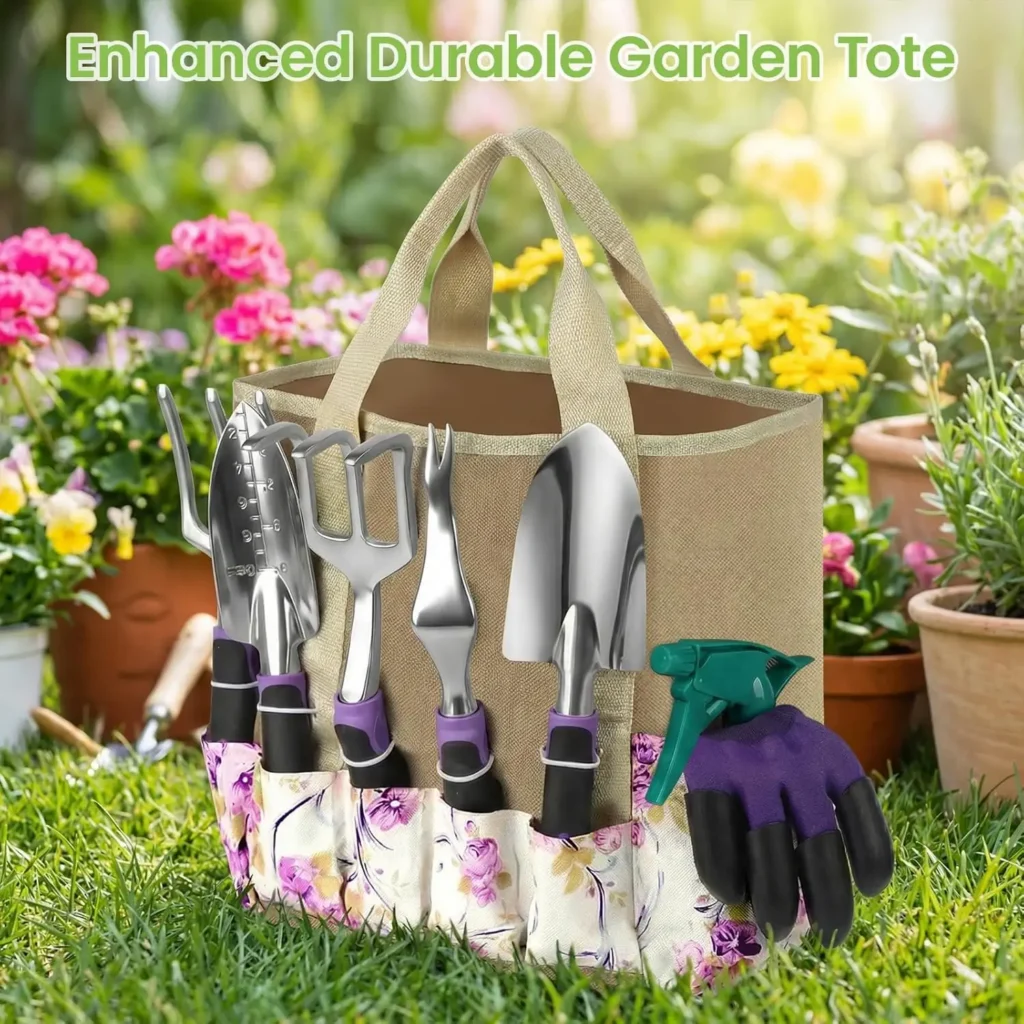
2. Tudoccy 30-Piece Stainless Steel Garden Tools Set
Best for: Beginners and container gardeners
If you are just starting out, buying individual tools is overwhelming and expensive. The Tudoccy 30-piece set solves that problem beautifully. It includes a trowel, transplanting tool, hand rake, weeder, cultivator, pruner, spray bottle, gloves, plant tags, and a heavy-duty canvas bag.
What I love: The stainless steel heads are rust-proof (leave them out in the rain-they won’t care). The nonslip ergonomic rubber handles are easy to clean, and the bag’s reinforced stitching survived my toddler dragging it across concrete.
- Price: $29.99
- Where to buy: Amazon
Perfect for: The urban gardener with a patio container garden or anyone planning a vegetable garden for the first time. You get everything you need and nothing you don’t.
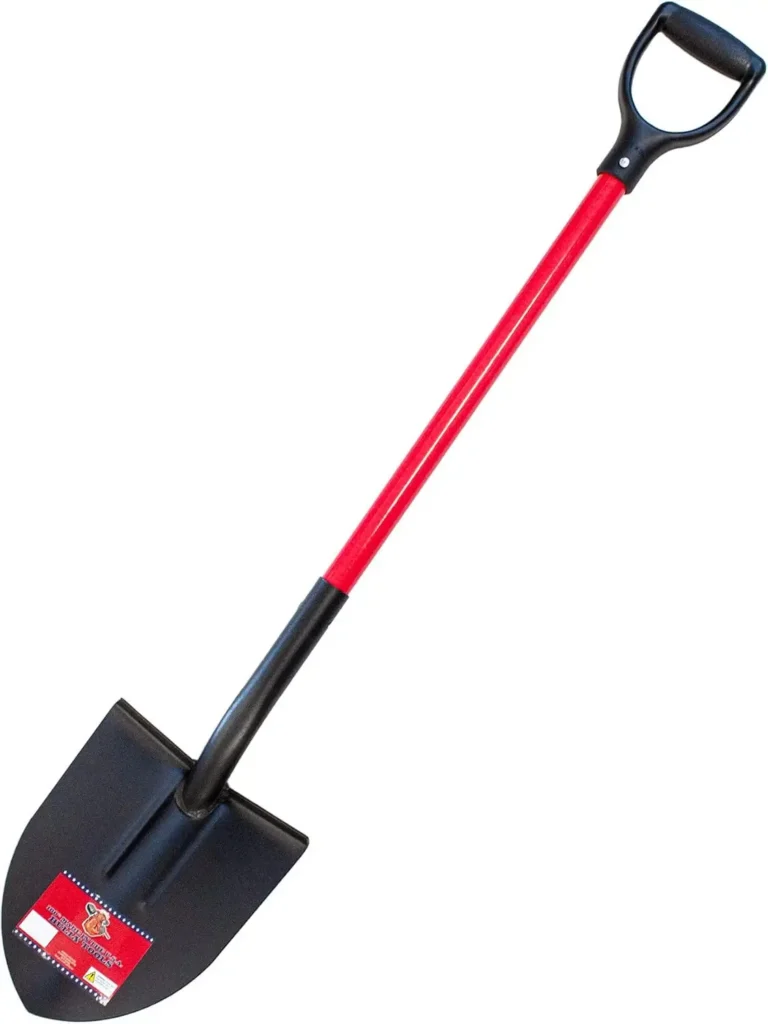
3. Bully Tools 14-Gauge Round Point Shovel
Best for: Heavy digging and compacted soil
Shovels do the hard work. They break ground, move compost, and occasionally pry up rocks that have no business being in a flower bed. The Bully Tools 14-Gauge Round Point Shovel is commercial-grade-meaning it will outlive you.
Key specs: 14-gauge steel blade (thicker than most residential shovels), triple-wall fiberglass shaft, and a wood-reinforced D-grip handle. The shaft is crack-resistant and lightweight, yet I have used mine to pry out a 40-pound boulder without so much as a creak.
- Price: Starting at $57.74
- Where to buy: Amazon
Common mistake to avoid: Do not use a round point shovel to edge your lawn. That is what a spade or edger is for. Using the wrong tool fatigues you faster and damages the blade.
4. Roamwild Multi-Digger Garden Spade

Best for: Cutting through sod and roots
This is my secret weapon for planning a vegetable garden in an area that is currently lawn. The Roamwild Multi-Digger looks like a standard spade until you notice the serrated cutting edge on the side of the blade. That serration slices through sod and roots like a bread knife through a baguette.
Ergonomics win: The extra-large D-grip handle has a middle bar. Grip the top for power digging (breaking new ground). Grip the middle bar for precision work near delicate perennials. At 3.6 pounds, it is light enough to use for an afternoon without shoulder fatigue.
- Price: Starting at $59.99
- Where to buy: Amazon
5. Bully Tools 16-Inch Bow Rake With Fiberglass Handle
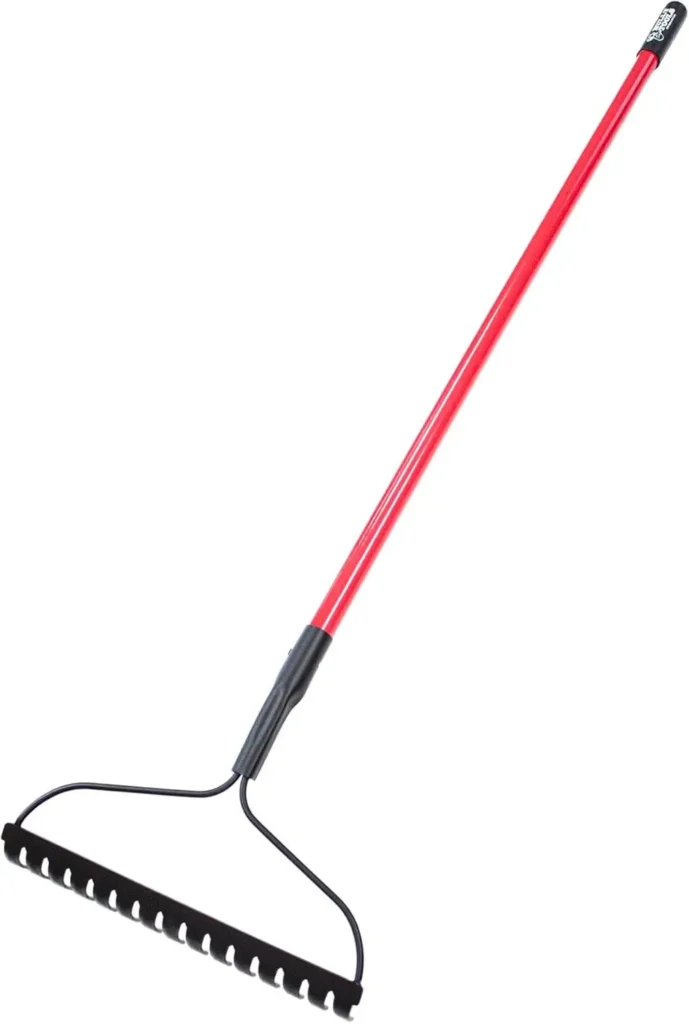
Best for: Leveling soil and spreading mulch
Do not confuse this with a leaf rake. A bow rake (also called a garden rake) has thick, 10-gauge steel tines bent at a 90-degree angle. Its job is to move soil, level beds, and spread compost—-not gather leaves.
Why I recommend it: The fiberglass handle is unbreakable in normal use, and the 16-inch width strikes the perfect balance between efficiency and maneuverability. American-made, commercial-grade quality.
- Price: Starting at $37.99
- Where to buy: Amazon
Pro tip for putting leaves to work: Use this bow rake to pull fallen leaves into your vegetable beds in autumn, then top with cardboard and compost. The leaves will break down over winter, feeding your soil for spring planting.
6. Tabor Tools Digging Fork
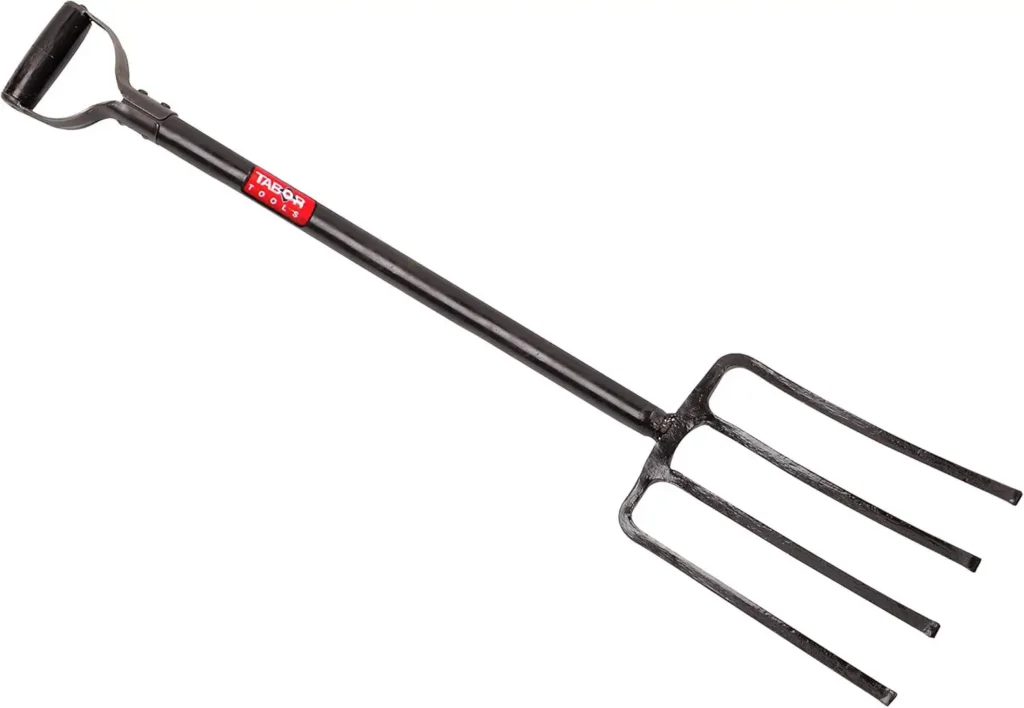
Best for: Breaking up compacted soil and harvesting root vegetables
A digging fork is not a pitchfork. A pitchfork moves hay; a digging fork breaks earth. The Tabor Tools Digging Fork excels at both loosening hardpan soil and lifting potatoes without spearing them.
Unique design: The tines are flat across the front and rounded at the back. This shape glides through compacted clay but also scoops rocks and debris effectively. In testing, the all-steel construction handled every task-weatherproof, sturdy, and well-balanced.
- Price: Starting at $69.90
- Where to buy: Amazon
When to use it: After you have used your shovel to open the ground, switch to the digging fork to aerate and fluff the soil without destroying its structure.
7. Mecheer 3-Piece Garden Tool Set
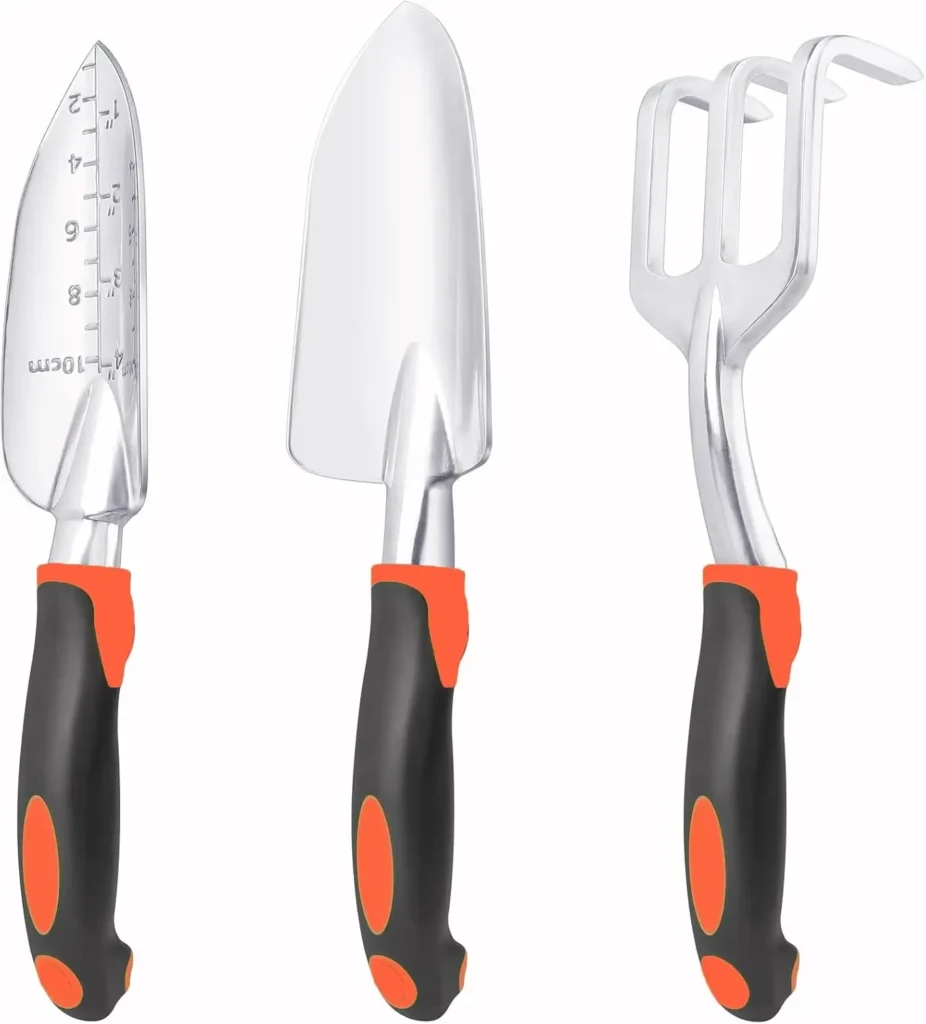
Best for: Budget-conscious beginners
At just $12.99, this three-piece set is almost absurdly affordable-and it does not feel cheap. You get a hand trowel for digging, a three-claw hand rake for aerating pots, and a transplant trowel with depth markings on the head.
The depth markings are genius: When planning a vegetable garden, planting seeds or seedlings at the correct depth is half the battle. The markings on the transplant trowel tell you exactly how deep you are going.
- Price: $12.99
- Where to buy: Amazon
Ideal for: Apartment dwellers with balcony containers, or as a gift for a child who wants to “help” in the garden.
8. Black+Decker 20V Max Cordless String Trimmer
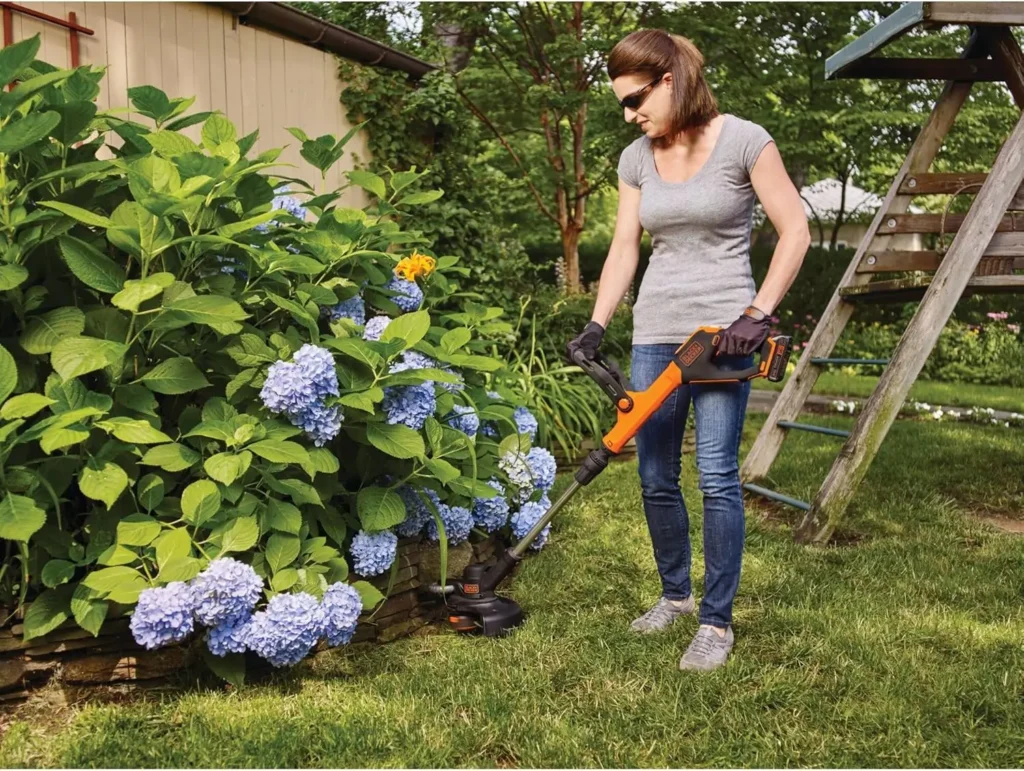
Best for: Edging garden beds and managing pathways
A clean edge makes a vegetable garden look intentional rather than wild. The Black+Decker 20V Max converts from a string trimmer to a wheeled edger with a simple flip. The wheel guides the cut, giving you a crisp, professional line along sidewalks and bed borders.
Why battery power wins: No gas fumes, no pull cords, no mixing oil. The EasyFeed line advancement system automatically feeds more line when needed-no bumping required.
- Price: Starting at $119.00
- Where to buy: Amazon
Seasonal tip: In early spring, use the edger function to redefine your vegetable garden borders before mulching. This prevents grass from creeping into your beds all summer.
9. AcuRite Digital Rain Gauge With Self-Emptying Collector
Best for: Water-wise gardeners and vegetable growers
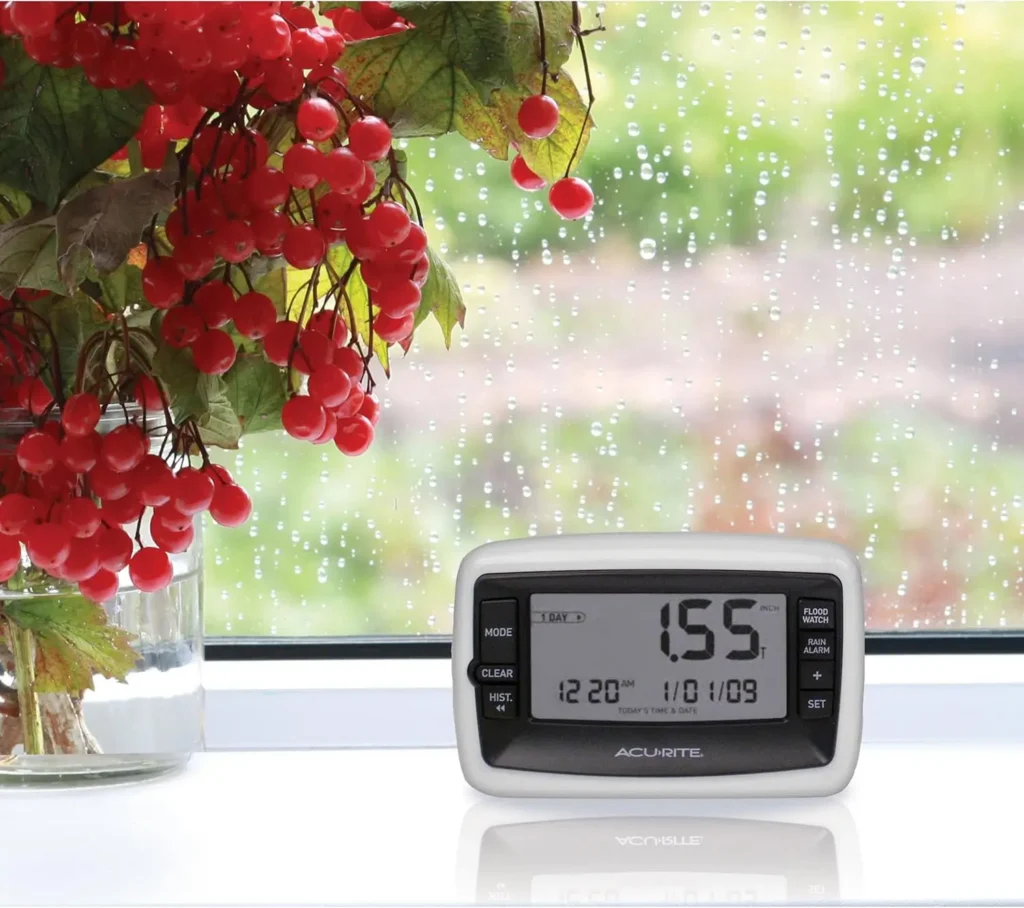
Most gardeners overwater. It is the number one mistake I see. The AcuRite Wireless Digital Rain Gauge removes the guesswork. An outdoor collector measures rainfall, and an indoor LCD display shows you the data from up to 100 feet away.
The self-emptying feature is a game-changer: You never have to go outside in the rain to empty a tube. The collector empties itself automatically. You can also set customizable rain alerts or flood-risk warnings.
- Price: Starting at $30.96
- Where to buy: Amazon
**When *planning a vegetable garden*, place the rain collector near your beds. If you receive 1 inch of rain in a week, you do not need to water your tomatoes or squash. If you receive less than ½ inch, supplemental watering is necessary.
10. Showa Atlas 300 Rubber-Coated Gloves
Best for: All-around comfort and grip
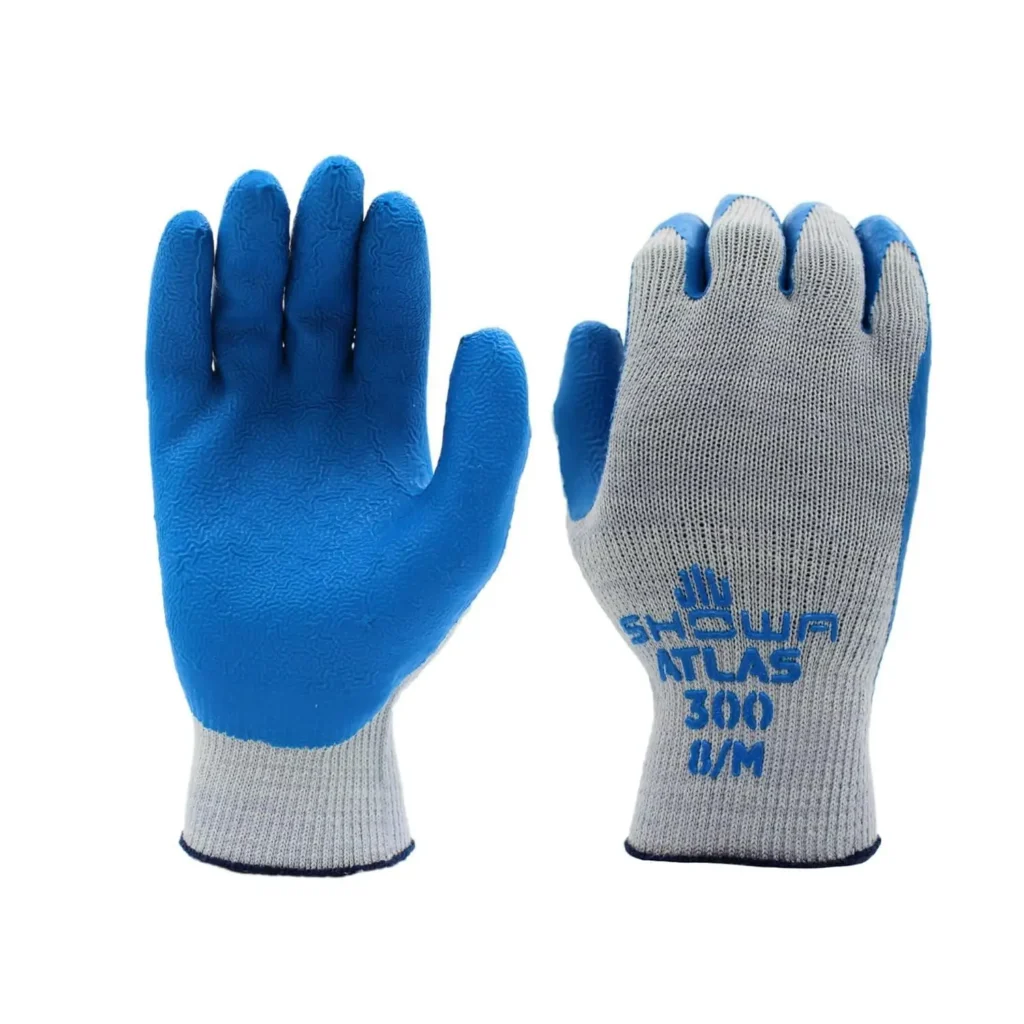
I have tested over a dozen gardening gloves, and the Showa Atlas 300s are the ones I reach for every single time. The rubberized coating on the palm and fingers provides a secure grip—even on wet shovel handles or muddy weeds. The woven cotton backing breathes, so your hands do not turn into saunas.
Why not leather? Leather gloves get stiff when wet. These remain flexible and dry quickly. They also fit like a second skin, allowing you to feel small seeds or delicate seedlings.
- Price: Starting at $39.95
- Where to buy: Amazon
Tools and Materials Needed for a Successful 2026 Garden Season
Based on the tools above, here is your minimalist starter kit (under $150):
| Tool | Purpose |
|---|---|
| Ratchet pruning shears | Trimming, harvesting, deadheading |
| Hand trowel set (3-piece) | Planting, weeding, transplanting |
| Digging fork | Soil aeration and root vegetable harvest |
| Bow rake | Leveling beds and spreading compost |
| Rubber-coated gloves | Hand protection and grip |
| Rain gauge | Water management |
If you have a larger yard or are planning a vegetable garden larger than 100 square feet, add the round point shovel and the cordless string trimmer.
Common Mistakes Gardeners Make (And How to Avoid Them in 2026)
Mistake #1: Buying a “set” of cheap tools in a plastic box
Those $19.99 sets with bright aluminum handles will break within six months. The metal bends. The handles slip. You end up frustrated. Solution: Buy fewer tools but better ones. A single good trowel is better than five bad ones.
Mistake #2: Using the wrong tool for the job
I have seen people use pruning shears on tree roots (ruins the shears) and shovels to pull weeds (ruins your back). Solution: Stop and ask: Is this tool designed for this task? If not, go get the right one.
Mistake #3: Neglecting maintenance
Dirty, dull tools are harder to use and spread plant diseases. Solution: Clean soil off blades after each use. Sharpen pruners and shovels once per year (a $10 file is all you need). Oil metal parts with 3-in-1 oil to prevent rust.
Mistake #4: Forgetting to put leaves to work
Raking leaves into bags for landfill pickup is a sin against horticulture. Solution: Shred leaves with your mower and use them as mulch or compost. Leaves are free organic matter—nature’s gift to your soil.
Seasonal Tips: Getting the Most from Your Tools in 2026
Spring (Planning a vegetable garden)
- Use your bow rake to create smooth, level seedbeds.
- Employ your digging fork to loosen soil after winter compaction.
- Calibrate your rain gauge before the first spring showers.
Summer (Maintenance and harvest)
- Ratchet pruners for daily harvesting of beans, cucumbers, and peppers.
- String trimmer weekly to keep grass from invading beds.
- Clean gloves after each use to prevent spreading blight or mildew.
Autumn (Putting leaves to work)
- Mow over fallen leaves repeatedly until they are the size of confetti.
- Use your bow rake to spread shredded leaves over vegetable beds (2–3 inch layer).
- Store tools clean and dry. Hang shovels and forks—do not lean them on the floor.
Winter (Tool maintenance)
- Sharpen pruners and shovel blades.
- Apply a thin coat of boiled linseed oil to wooden handles.
- Order replacement parts (pruner springs, string trimmer line) before spring rush.
Pro Tips for Better Gardening Results
- The “Hose Test” for tool quality: Pick up a shovel or fork. Squeeze the handle. If it flexes or creaks, put it back. Quality tools feel solid and slightly heavy in a reassuring way.
- Left-handed gardeners, rejoice: The Gardener’s Friend pruners and Showa gloves are truly ambidextrous. Most other tools (shovels, rakes, forks) are neutral by design.
- **When **planning a vegetable garden, draw a map first. Use paper or a free app. Mark where each vegetable will go. Then use your tools to execute the plan. A map prevents the “I have extra tomato seedlings and nowhere to put them” panic.
- Putting leaves to work the lazy way: Do not rake. Run your lawn mower over the leaves, bag attachment on. Dump the shredded leaf bags directly onto your garden beds. Zero raking required.
Frequently Asked Questions (FAQ)
What is the single most important tool for a beginner gardener?
A quality pair of gloves and a hand trowel. You can do 80% of small-garden tasks with just those two things-planting, weeding, transplanting, and light digging. Add a pruning shear later for harvesting and maintenance.
How do I know if a tool is good quality before buying online?
Read reviews that mention the words “solid,” “sturdy,” or “no flex.” Look for forged steel (not stamped steel), full tang construction (the metal goes all the way into the handle), and replaceable parts. Avoid tools sold in plastic clamshell packaging-that is a red flag.
Can I use kitchen scissors instead of pruning shears?
Please do not. Kitchen shears are not hardened for wood stems. You will dull them immediately, and the pivot joint is not designed for the torque of cutting branches. Buy actual pruning shears. Your kitchen (and your plants) will thank you.
How often should I replace my gardening tools?
With proper care, quality tools last decades. I am still using a digging fork my grandmother bought in 1972. Replace only when a handle cracks, a blade bends permanently, or a moving part (like a pruner spring) fails and is not repairable.
Is it worth spending more on ergonomic tools?
Absolutely-if you garden for more than 30 minutes at a time. The ratchet pruners and padded-grip tools on this list reduce hand fatigue by 50–70%. That means you will weed longer and complain less. Your hands are worth the extra $10–20.
Conclusion: Your Best Garden Starts with the Right Tools
Planning a vegetable garden is an act of hope. You imagine the taste of a sun-warmed tomato, the smell of basil between your fingers, the satisfaction of feeding people you love. But hope alone does not pull weeds or break ground. Tools do.
The best gardening tools of 2026 reflect a simple truth: gardening should not hurt. Whether you choose the ratchet pruners for your arthritic hands, the self-emptying rain gauge for your water bill, or the Bully shovel for your clay soil, invest in equipment that respects your body and your time.
And please—start putting leaves to work this autumn. Do not bag them. Do not burn them. Shred them. Spread them. Let them rot into black gold. Your soil will reward you with vegetables that taste like sunshine.
Now go get your hands dirty. Your garden is waiting.
Have a favorite tool I missed? Found a 2026 innovation that changed your gardening life? Drop a comment below or tag me on social media. I read every message-and I am always hunting for the next great tool to test.
Happy growing, friends.